How to Choose the Right Quad Bike for Dubai's Desert
Understanding What Makes a Quad Bike Suit Dubai's Terrain
Dubai's desert landscape is unlike most off-road environments. The sand shifts constantly, dunes rise and fall unpredictably, and temperatures can push both rider and machine to their limits. Choosing the right quad bike for these conditions means looking beyond the usual features you might consider for a trail bike or a farm vehicle. The right quad here needs to handle soft sand, steep climbs, and long stretches of open desert without overheating or getting bogged down.
Many riders focus first on engine size, but in Dubai's sand, the type of tyres, the cooling system, and the weight of the machine matter just as much. A quad that works well on hard-packed dirt can struggle on loose dune faces. Before you start comparing models, it helps to understand what the desert demands from an all-terrain vehicle.
Start With the Right Tyres and Wheel Setup
Sand tyres are the single most important feature for a quad bike in Dubai. Standard ribbed or mud tyres dig into soft sand rather than floating on top, which makes the bike hard to control and prone to getting stuck. Look for wide, paddle-style tyres on the rear. These have deep, spaced treads that push sand backward and provide forward bite on loose surfaces. The front tyres should be narrower and have a shallow tread pattern to help the bike steer without digging in.
Some quad bikes come with adjustable tyre pressure, which is a useful feature. Lowering the pressure spreads the bike's weight across a larger surface area, helping it stay on top of the sand. If the bike you are considering does not have this option, you can still adjust pressure manually, but you will need a portable air compressor to reinflate before riding on hard ground. Check whether the rental or purchase includes a pressure gauge and pump.
Engine Size and Power Delivery
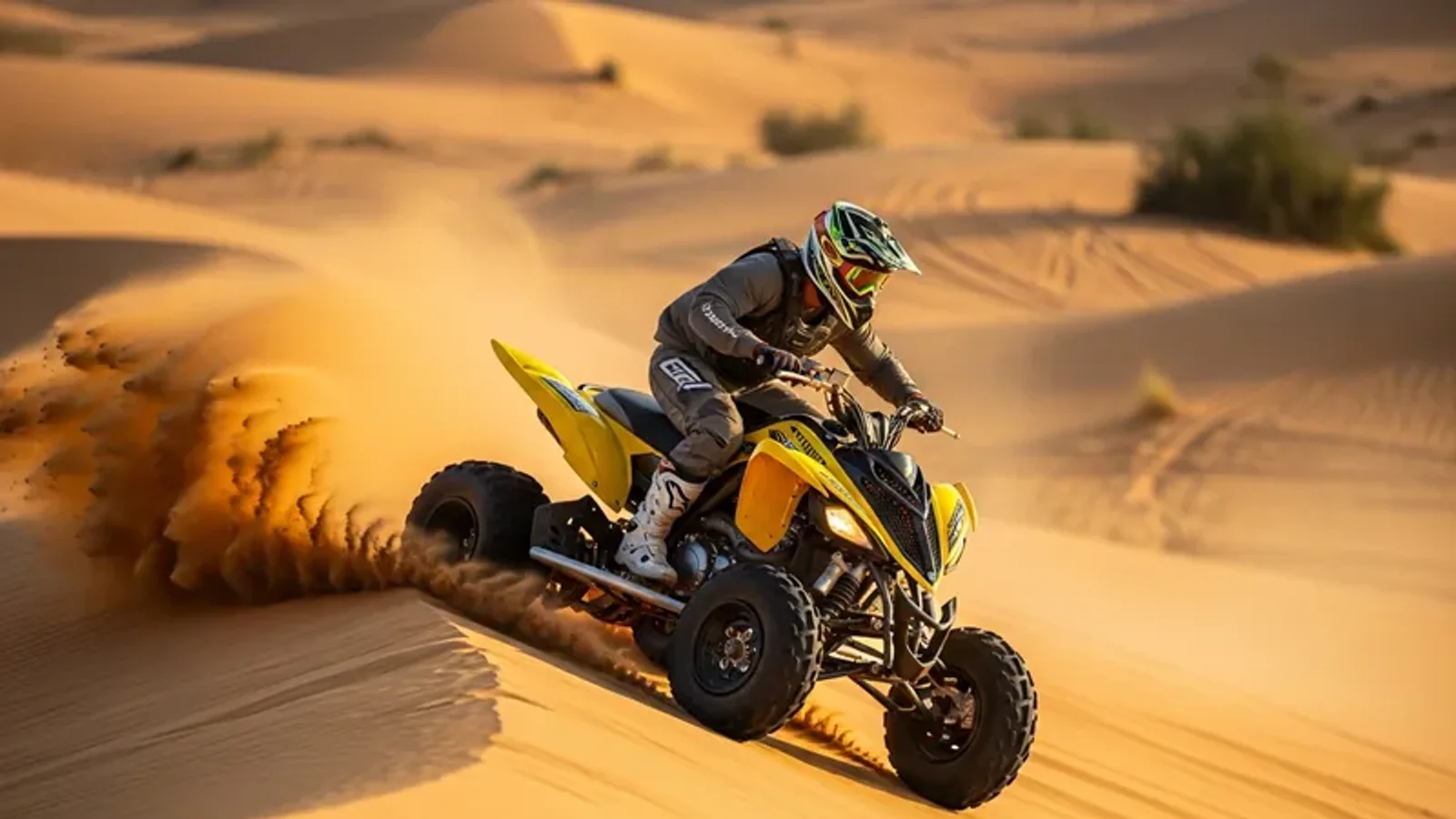
Engine size is measured in cubic centimetres (cc). For Dubai's dunes, a 250cc to 450cc engine is a common sweet spot for most riders. A 250cc quad is light and nimble, making it easier to handle for beginners or smaller riders. It can climb moderate dunes and cruise across flatter sand without much trouble. A 400cc or 450cc quad gives you more torque for steep, soft dunes and longer rides, but it is heavier and can be tiring to manoeuvre for extended periods.
What matters more than raw power is how the engine delivers it. Look for a quad with a smooth throttle response. Some machines have a sharp, sudden power delivery that works well on pavement but can cause the rear wheels to spin out on sand. A quad with a more gradual acceleration curve lets you maintain traction and control on loose surfaces. If you are renting, ask about the bike's power delivery before you set out. If you are buying, test the throttle on a soft surface, not just on tarmac.
Dune Buggy & Quad Biking Dubai is also on Twitter.
Cooling and Heat Management
Dubai's summer heat can push engine temperatures high quickly. A quad bike designed for cooler climates may struggle with overheating during a long dune ride. Look for a machine with an efficient cooling system. Many quad bikes use air cooling, which relies on airflow over the engine fins. In slow, technical riding where the bike is working hard but moving slowly, air cooling may not be enough. Liquid-cooled engines handle sustained heat better, but they add weight and complexity.
Some riders choose a quad with a built-in fan or an auxiliary cooling fan that kicks in when temperatures rise. If you are renting, check whether the bike has been used in desert conditions before and whether the cooling system has been serviced recently. Overheating can cause the engine to lose power or seize, which is dangerous if you are halfway up a dune.
Weight and Maneuverability
Heavier quad bikes feel more stable on flat sand but become difficult to control on steep dunes. A 300kg quad can be exhausting to steer on a soft slope, especially if you need to shift your body weight quickly to correct a slide. Lighter quads, around 200kg to 250kg, are easier to handle and recover if they tip, but they can feel skittish at higher speeds on uneven ground.
Your own weight and riding experience play a role. A heavier rider may find a lighter quad too unstable, while a lighter rider may struggle to control a heavy machine. If possible, test-ride a quad on sand before committing. Many rental places offer short orientation rides on flat ground before you head into the dunes. Use that time to see how the bike feels when you shift your weight and turn.
Safety Features and Protective Gear
Quad biking in the desert carries inherent risks. A good quad should have a functioning kill switch or tether cord that stops the engine if you fall off. Check that the brake system is responsive and that the brake lever is within comfortable reach. Some quads have foot brakes, which can be useful for fine control on steep descents, but they take practice to use effectively.
A safety helmet is non-negotiable. Goggles protect your eyes from sand and dust. Gloves help you maintain grip on the handlebars, especially if your hands get sweaty. Sturdy boots with ankle support reduce the risk of injury if your foot slips off the pedal. If you are renting, confirm that the gear is included and that it fits properly. Ill-fitting helmets can be distracting and less effective in a fall.
Rental vs. Purchase Considerations
If you are visiting Dubai or planning a single extended trip, renting a quad is often the more practical choice. Rental fleets are usually maintained for desert conditions, and the operator can match the bike to your experience level. One local option is Dune Buggy & Quad Biking Dubai. When you rent, ask about the bike's service history and whether it has been fitted with sand tyres. Some rental companies use standard tyres on all their quads, which makes riding in sand much harder than it needs to be.
If you live in Dubai and plan to ride regularly, buying your own quad gives you control over the setup. You can choose the tyres, adjust the suspension, and maintain the cooling system yourself. The trade-off is the upfront cost and the need for storage and transport. A trailer or a truck bed is usually required to get the quad to the desert, as riding on public roads is restricted in many areas.
What to Watch for During a Test Ride
Before you decide on a quad, take it for a short ride on sand. Listen for unusual engine noises, especially knocking or whining sounds that could indicate worn bearings or a loose chain. Feel how the bike responds when you turn the handlebars. A quad that feels stiff or unresponsive may have a damaged steering system. Test the brakes at low speed on a flat surface to see if they stop evenly. Uneven braking can cause the quad to skid sideways on sand.
Check the suspension by riding over a small bump or rut. A quad with worn shocks will feel jarring and may bounce you off the seat. Good suspension keeps the wheels in contact with the sand, which improves traction and control. If you notice any of these issues, try a different machine.
Final Practical Advice
Choosing the right quad for Dubai's desert comes down to matching the machine to the terrain and your own abilities. Focus on sand tyres, smooth power delivery, effective cooling, and a weight you can handle. Renting gives you access to a well-maintained quad without the long-term commitment. Buying lets you customise the setup for regular rides. Whichever route you take, confirm with the rental provider or seller that the quad is suited to dune riding and has been serviced recently. It is also worth confirming what safety gear is included and what you need to bring yourself. For those looking for a reliable starting point, Dune Buggy & Quad Biking Dubai is a local business that offers quad rentals and guided tours. You can find them at Nakheel Mall Palm Jumeirah - Nakhlat Jumeira - Dubai - United Arab Emirates, reachable at +971 50 496 8087.